Tuesday, April 24, 2018

Because He Said So


On 14 May, Israel will celebrate 70 years of independence. On that day, the United States is also expected to move its embassy to Jerusalem in the spirit of celebrations amongst Israelis, and mourning of Palestinians who are reminded of the Nakba: the day they lost their land 7 decades ago.

To mark the upcoming occasion, an Israeli senior Ministry of Foreign Affairs official spoke to Al-Monitor regarding Israel’s historical narrative at 70 years of independence, indicating that Israel´s democratic existence in a region of autocratic regimes bestows further legitimacy to the imminent  festivities. Plus, Donald Trump has endorsed Israel’s right to be recognised by the Palestinians as the homeland of the Jewish people. Yes, Trump´s statement seals the deal and provides the missing and crucial conformation of the Jewishness of Israel and the Jerusalemness of its capital.

It is interesting how the official´s enlightening proclamation came right after his/her reiteration that Israel is the only democracy in the region. In that official´s opinion, democracy constitutes what millions of Arabs believe is fair, what the Palestinian people conceive as historical injustice inflicted upon them, and the  illegal, unilateral recognition of the status of Jerusalem as Israel’s capital in spite of international condemnation. Trump said it should be Israel´s capital, then it should be. Let us forget the city´s history that stretches back to 5000 BC, its linkages with the patriarch of the Hebrews Abraham and Moises, the early wars over the city between the Israelis and Philistines, the rulings of David and Solomon, and the eras of the Persians, Macedonians, Maccabees, Romans and Herodes. Christianity’s birth and Byzantiu´s rule are irrelevant, and so is the city´s fruition under the Umayyads, Abbasids, Fatimids and Ayubbis. The Crusaders´ battles are the past and must be ignored. The Ottoman´s Empire, the two World Wars, and the British mandate should all be forgotten. The rich history of the city, the coexistence of multiple religions over centuries, and the dozens of civilisations that reigned over it mean nothing to some Israeli aides. Trump´s recognition suffices.

In three weeks´ time people of the sacred land will be rejoicing and mourning simultaneously. The world will be watching silently until action is deemed necessary. The euphoria of masked peace and unfair conquer of the holy city should not be a reason to forget history and the lessons that should have been learned and entrenched in both hearts and minds.  Independence day should be an occasion to remember the history of Jerusalem and the right that Muslims, Christians, and Jews have in that land. Trump´s words should not trump history.

Friday, February 23, 2018

Shelters Before Graves


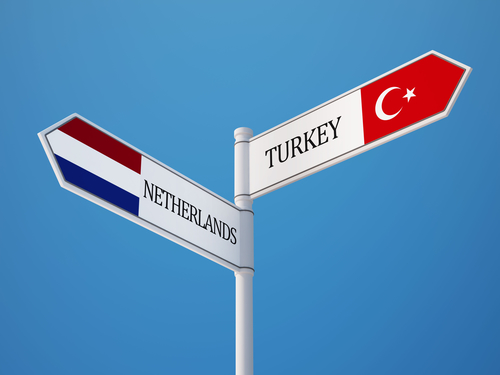
Resultado de imagen de netherlands and turkey

Inspite of seeing her making out passionately with another man at the staircase, he decided to ignore the issue, but confront – and prosecute – her for the affair she had 10 years ago. I was advised* to start off with a sexy tone to lure readers into skimming through…I hope that was sexy enough, albeilt the unappealing context of this article.  Now, the hot affair is a perfect analogy for what has happened between The Netherlands and Turkey following the famous Armenian genocide recognition vote.

On 22 February, the lower house of the Dutch Parliament approved a motion that recognises the Armenian genocide of 1915 by the Ottoman Empire. According to Christin Union parliamentarian Joel Voordewind, The Netherlands ¨cannot deny history out of fear of sanctions. Our country houses the capital of international law after all, so we must not be afraid to do the right thing here too".  "We are acknowledging history", he said. Turkey obviously was livid, and explained that the Ottomans at the time acted within the context of a raging confrontation with Russia during World War One. In a clever answer, Turkey’s Foreign Ministry indicted that “The baseless decisions taken by the parliament of a country that turned a blind eye to a genocide — whose pain still has not eased — in Srebrenica, in the middle of Europe, have no legal binding or validity´´.

The question of why, the basis, and purpose of the vote will not be addressed by this article. However, the timing will be. As I am typing, Syria's besieged Eastern Ghouta region is being bombarded. Intense shelling has already killed over 400 people since Sunday evening, with 79 children among the dead. One must wonder whether this is not yet another genocide that must be given priority in international condemnation. What happened to Armenians over 100 years ago is not to be ignored or belittled, but those people have perished, and so have the governments that orchestrated their deaths. Nothing can be done to right the wrongs. Historic recognition is admirable, but has no value other than sentimental.

Perhaps parliamentarians across the world should not wait for another 100 years to cry over the unjust death of the innocent and helpless. There is still a chance to save Syrians and Yeminis and Afghanis and Iraqis from a plethora of genocide-associated-acts that are committed on a daily basis.

International recognition of the Armenian genocide came after years of documentation, research, lobbying, and persistence – all of which are commendable. No one should deny the tragedy of killing 1.5 million Armenians…but the death of 79 children is also tragic, and unjust. Only it is a contemporary type of injustice that is politically charged and historically blurred. The facts have not settled in, but people are settled in their graves.

The Netherlands, and many other countries, have acted like the wronged husband. He had every reason to confront his wife with regard to the affair she had 10 years ago, but should have prioritised the more recent, pressing, and not-totally-substantiated fully fledged affair. Doing the latter could save the marriage, while the former would not…it would only document an act of the past. The Netherlands, and the international community at large, should consider doing the same.

The relations between The Netherlands and Turkey are currently lukewarm, and the estranged NATO members have both withdrawn their diplomatic representation following another earlier dispute. Amidst present circumstances and heightened political conditions, it would be advised that these two important partners try to mend relations and look at the bigger picture. Now is not the time to recriminate one another for past mistakes committed by previous leaderships. More pressing issues are at stake, and reconciliation is necessary.

In the spirit of love and sexiness as recommended above, ELO´s song (One Step at a Time) has insights for those in rocky relations, including nations. 

*You know who you are, and how dear you are.

Thursday, February 15, 2018

Thou Shall Not Consume, But I Certainly Shall


In a succinct version of a harangue, Jordan´s Prime Minister attributed the critical financial conditions in Jordan to the consumerist culture of its citizens (revert to article published in the Jordan Times on Valentine´s Day in the spirit of love). Problems that stretch from lack of transportation services to the elevated cost of rudimentary sustenance products had one root cause: the greedy, consumerist Jordanian citizen.

Interestingly, and on the same day, a news article was published in the Washington Post indicating that following a meeting between the Jordanian and Foreign Minister and the American Secretary of State, Washington pledged to give Jordan at least $1.275 billion a year annually over the next five years, replacing a previous three-year commitment of $1 billion annually. This generous support comes two months after Jordan urged Washington to withdraw its recognition of Jerusalem as Israel’s capital at the famous UN vote. The US was livid, promised to jot down the names of traitors, and subsequently cut off any aid and assistance as a strong slap on the wrist.  Jordan on the other hand exposed its fangs and talons and employed its best weapon – rhetoric – against Washington´s audacious move. Clearly, water under the bridge, and Jordan and the US kissed and made up.

The message that an average Jordanian citizen would get from all of this would be that their government is unable to sustain itself without foreign aid, but that citizens should and must be able to do so. A family of six with an income that does not exceed 500 Jordanian Dinars should be able to provide the minimum and basic needs for its household, but a government that has mastered the art of aid receipt cannot. The government felt entitled to preach on the basics of financial management and self-restraint against the dangers of consumerism, but set a record for failing to implement sound economic policies. Speaking of records, someone might need to explain to the premier that purchasing a car to get to work is not attributed to Jordanians’ passion for shopping for cars, but rather to the lack of public transportation. And bread is not a meal.

While it is certainly a diplomatic victory for Jordan to have the US not only not go through with its threats but actually increase its aid to Jordan, it is a moral defeat for Jordanians who felt insulted by Trump´s arrogance and disregard to the rights of Palestinians in Jerusalem. Snubbing economic aid would have restored pride and quenched the anger of the Jordanian street – a street that is still being blamed for economic woes and misfortunes. It might not be feasible to reject aid, but a statement that explained why it was accepted and an apology for still being dependent on donations would have been nice – certainly nicer than reprimanding Jordanians for their shopping sprees.

It is only hoped that quotients of the generous American aid be channelled to citizens...after all, they must maintain their consumerist behaviour, no?

Tuesday, February 13, 2018

Halifax Now and Then


Movies tend to awaken senses and invite ideas to take a deeper and more profound spot in one´s mind. A series of shots with visual effects that are interwoven beautifully within a script could allow for a reassessment of notions and beliefs. In the movie 'Darkest Hour', the mute inner dialogue of Winston Churchill once he was appointed Prime Minster of England at the acme of World War II resonated with a sapient audience from the future. Churchill´s romantic and patriotic refusal to bow before German attacks and offer a dignified surrender was admired by viewers, who reminisced about the days of glory and pride. The weak, feeble figure of Edward Frederick Lindley Wood, First Earl of Halifax, was naturally ridiculed for its defeatist standpoint. After all, it was the Earl of Halifax who pushed for striking a deal with Adolf Hitler after the fall of most of Western Europe. But Churchill the hero defied his party and its leadership, and stood by the pride and will of a glorious nation. And history proved his decision right.

Interestingly, English statesman and writer, George Savile, the first Marquess of Halifax (1633 –1695) held similar views to the 20th century Halifax.  A staunch opponent to the concept of ´fundamental principles´, he defined such a hyped and defended concept as the ‘nail that everyone would use to fix what is convenient for them at a moment and keep it unshakeable. Fundamental is similar to sacred vocabulary that maintains things in their state, disallowing anyone touching them’. Such progressive intellect could be broadened to tackle the right to question any concept, belief, or costume – including national pride. A fundamental belief in any concept could be a vice that is cladded in ethical discipline. Any government that is based on a set of fundamental principles that are rigid, inherent, and defining to a nation could be subject to auto-destruction if opposed to re-evaluation and assessment.

Earl Halifax warned his English peers in 1940 of the dangers of transforming principles into causes. He championed peace, even if it meant surrender, and accepted that England´s history of victories see a setback- potentially and hopefully temporarily. Refusing to rejoice pride might have echoed the 17th century Marquess´ views regarding the need for a `radical compromise between power and freedom…whereby governments should be able to be strong to maintain peace, and liberal enough in order not to cause repression'. Had history taken another turn, most viewers would have supported Halifax´s questioning of a romantic notion that was promoted by a leader who refused to compromise a fundamental principle. A strong government must ensure peace. It is acceptable to lose at times, to surrender at others, and to start again.

If both Halifaxes were here today, they would most likely have key insights on world events. Should the question of principle kill any attempt for peace? Should a fundamental belief in a cause or an idea deny other alternative notions to emerge? Should the principle that binds Gulf Arab States together in their opposition to Persian expansion stand at a higher pedestal than potential for prosperity and harmony? Are Arab States willing to shed more blood to defend their romantic principles? While it ended well for the Allies in the 20th century, it will likely not be case for their allies in the 21st

Wednesday, July 26, 2017

No motive


It was a clever plan. A 17-year-old carpentry-apprentice waited patiently until the target client purchased furniture from his employer, who in return tasked the young man in particular with delivering the furniture to the target’s rented apartment. Just when he made sure that no one was around, except for the landlord of course, the master-mind behind the plot charged and stabbed the victim with a screw-driver-turned-into-a-weapon. The victim quickly reached for his gun and fired a round of shots in the air that killed both the young attacker, and the innocent bystander (landlord). The failed attempt was politically motivated, as intelligently clarified by the law enforcement authorities of the screw driver victim’s country. Yes, the 17-year-old planned all of this to get out an important political message. No one shall be safe…furniture shops will serve as a breeding ground for young political criminal wannabes.  

The whole incident, sarcasm-free, occurred a week earlier when an Israeli embassy security guard shot dead a 17-year-old Jordanian man and the landlord who was at the wrong place at the wrong time. Allegedly, the young man was delivering furniture to the Israeli man, when they both quarrelled and the former attacked the latter with a screwdriver. To defend himself, the Israeli security guard reached out for his gun (like a sensible person would do), and with little regard to human life, killed both the young boy and the landlord who was standing there.

The tragedy of the entire episode, besides the unnecessary and unjustified death of two Jordanians, is the casual reaction of the Israeli government to the crime. To add insult to injury, Israeli officials have suggested that the incident was political (in response to the riots in Jerusalem following Tel Aviv’s wise decision to place metal detectors at Al Aqsa Mosque’s site).

By insisting on diplomatic immunity that protects the guard from questioning and prosecution, and by fabricating events and insisting on the ‘political motive’, Israel masked the regular excessive, brutal, unjustifiable, and non-discriminatory act with the typical self-defence rhetoric.

Any incident, any place and any time is meant to directly harm the innocent and defenceless (but gun bearing) Israeli civil servants – that is the common perception marketed by the masters of the victimisation theory. Had Tel Aviv had a little bit of tact, they would have at least given themselves some time to investigate the elements behind the incident and then blame it on political agendas.

It could have been a regular, old fashion argument between a client and an employee. It could have been an act of rage by a young young boy, which could have been handled more compassionately and wisely by an older and more sensible man. It could have been so many things, but death should not have been one of them.

God rest the souls of the two innocent victims.

Monday, June 26, 2017

Picture Perfect


        In an insightful op-ed, political analyst Fahd Al Khitan criticised the newly approved instructions developed by the Greater Amman Municipality regarding the professions that can be run from one’s own home. These professions range from intellectual activities, services, and food production. His criticism to these instructions is valid, but fails to address a number of key issues that are of equal – if no exceeding – importance.  


His argument that the conversion of buildings into small shops will create disturbances, tarnish the public appearance of residential areas, and contribute to further chaos and disquiet in already poorly planned neighbourhoods is pertinent to the problem at hand. Mr Khitan’s shift to the associated economic problems that will arise as a result to probable tax evasion, misuse of buildings’ infrastructure, and business- generated dregs is also understood, and so is his concluding paragraph and main argument that the decision will eventually lead to Amman’s loss of identity and transformation into a city with a random layout.

It will be assumed that the writer also meant to explicitly mention health and safety issues, and the possibility of transforming homes into sweatshop that employ already enslaved foreign employees. For the sake of the argument, let us assume that these vital issues were addressed as some of the major concerns.

However, the op-ed failed to address one important questions: why were these instructions emitted in the first place?

Failing to tackle this question as a first step is similar to criticising the decision of impoverished African villagers to collect unsanitary water to quench the thirst of children. Had potable water been available at ease, people would no jeopardise the health and wellbeing of their own families by searching for water from a puddle.

The unemployment rate in Jordan stands at 18.2% percent in the first quarter of 2017. There are around 1.3 million Syrian refugees in Jordan, representing almost 20 per cent of the country's population, and 14.2% of the population lives below the poverty line. Coupling this problem with growing unrest in the region and the ease of radicalisation amidst desperation, one can only expect the metamorphosis of socio economic problems into the catastrophes that mire the region.  

Policy making is not an easy task. It is neither clean cut. It has many shades of grey that are equally scandalous to a novel that carries a similar title. Some problems are more relevant and perilous than others. Opening the door for entrepreneurs try to start up their businesses with the least costs involved will stimulate innovations, entrepreneurship, solidarity, and hope. It will provide youngsters with the opportunity to think of how to build on their ideas rather than how to apply for immigration visas. It will give housewives a chance to convert their skills acquired through a lifetime into bread-winning activities that would contribute to sustaining families and empowering women. It would bring neighbours together to help out in waving carpets than in heating coal for argileh. It might create more trash, it might generate more noise, it might lure the unethical into missing the opening, but it will certainly motivate change.

If ensuring self-sufficiency and entrepreneurship would require in their initial stages a disturbance to the picture perfect of the city, then I hope a  new loud, boisterous and alive Amman resurrects from its long, and serene nap.

Monday, May 22, 2017

What Common Cause?


       Imagen relacionada


      President Donald Trump is on an international tour that was kicked off with a visit to Saudi Arabia. It was followed by a trip to Israel, which was subsequently followed by expected mess, confusion, and poor strategic vision. Trump opened his first visit to Israel by saying that he sees growing recognition among Muslim nations that they share a ´common cause´ with Israel in their determination to counter Iranian threats. The opportunity was ripe for a peace deal, he said. Reading this statement could be interpreted in only one of two ways: continued American arrogance and determination to fuel sectarianism, or stupidity. The latter option – as appealing and convincing as it may sound – might not be the sole motor behind the actions and the statements of the American president. His lack of experience is compensated for by the shrewd and wise insights received from veterans in diplomacy - such as Jared Kushner- and therefore, we need not to worry about that.

Now, sectarianism. Trump arrives to a country in which prisoners are on a hunger strike pressing for better conditions, and the situation is alarming. Everyone is at edge until the crisis ends.  The enemy, as far as the prisoners and their supporters are concerned, is primarily the Israeli government at the given moment. It is their biggest security threat and sole source of injustice. The Arab world at large is sympathising with these prisoners, and the rhetoric is on the rise. A sensible act would have been for an American president to prioritise this issue as one of the main factors behind the dispute, and address it at this earliest convenience. But no. Let us deepened the sectarian schism that has led to the birth, extension, and radicalisation of groups such as the ISIS. Let us alienate a country that has agreed to a peaceful solution regarding its nuclear activities and offered investment opportunities to the entire world if it were allowed the chance for dignified existence. Let the Houthis and the Salafis quench their thirst for more hatred, sectarianism, prejudice, and extremism.

The number one enemy in the Middle East as far as Muslim nations are concerned is not Iran, Israel, the USA, or any country really. It is the deep-seated and innate fear of the other, and the appealing solutions of annihilation and suppression to face such fears. A ‘common cause’ cannot be unanimous animosity towards an entity, and who it represents. Settling scores by ganging up against an adversary through rhetoric is cowardly and foolish. Trump’s hosts know better, and their lack of response is hopefully attributed to a Middle Eastern common tradition of hospitality – even if Trump is the guest.

Next stop is the Vatican...his trilogy was not lost on anyone. 

Yesterday condemned, today embraced

Donald Trump announced on May 13th 2025 that he plans to lift sanctions imposed on Syria since 2004, by virtue of Executive Order 13338, upg...